


Volkswagen Ireland looks to year ahead following record 2025
The recent EU push-back on sales of new petrol and diesel cars to 2040 will not slow the rapid growth of battery electric vehicles (BEVs). That is according to Pierre Boutin, CEO and Volkswagen Ireland group managing director.
He said it was possible that some buyers might decide to stay with their current internal combustion engines (ICE) for a while longer. But he insisted that the acceleration of BEV buying will continue apace, regardless.
He was basing his optimism on BEVs surveys which found that the vast majority of people who had previously said they would switch to a BEV had not changed their minds. The demand is there, he said, the cars are there and the lower prices are there.
Gone are the days when you could only get an €80,000 model and ownership was outside most people’s ability to pay, he recalled. Now several carmakers have electric vehicles under or around the €20,000/€25,000 mark – including an imminent arrival from Volkswagen.
He acknowledged that there is, and will likely be, some demand for ICE vehicles because they continue to meet a need.
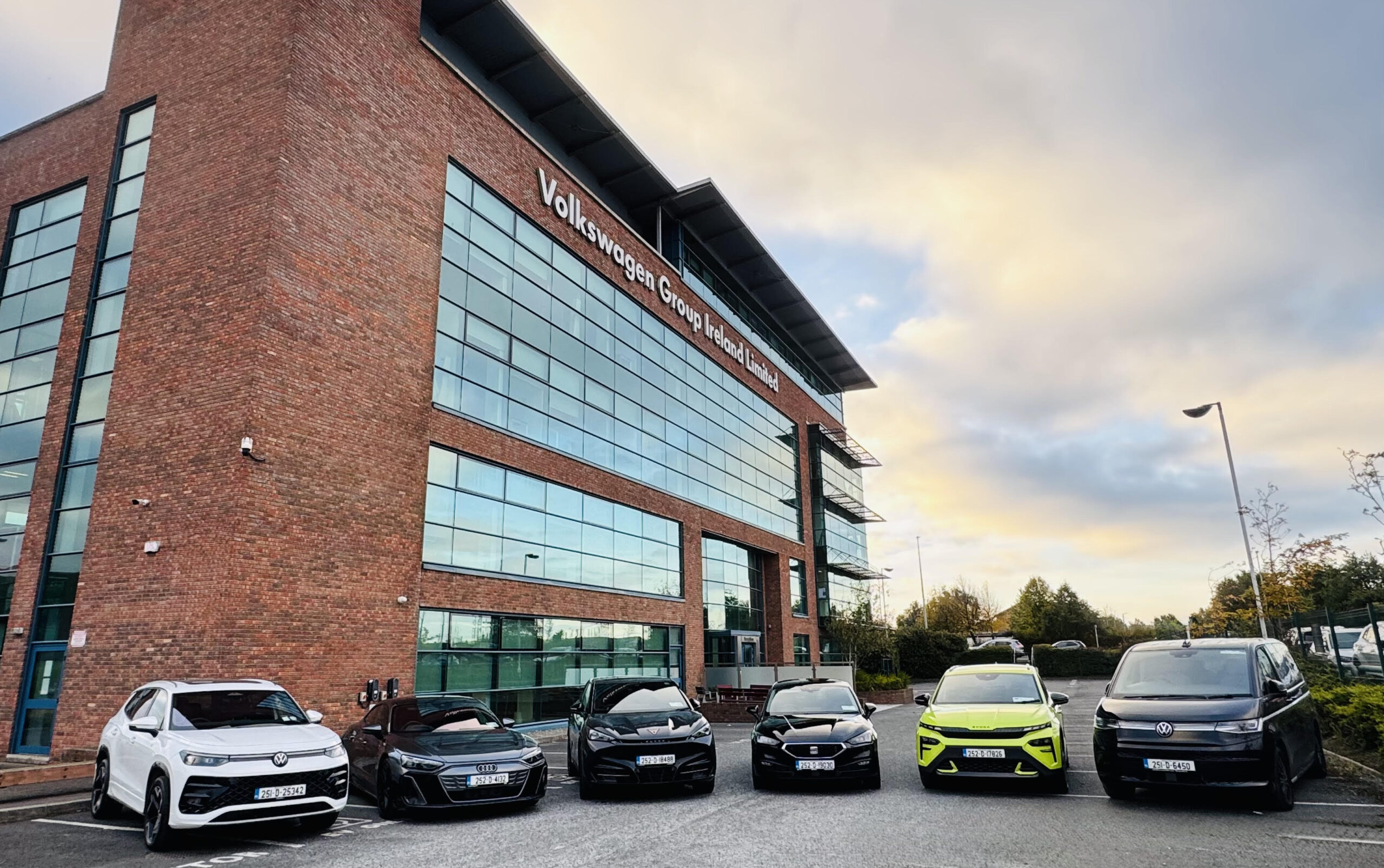
Mr Boutin spoke to me on the issue after he delivered an upbeat progress report this week on the Volkswagen Group’s sales in 2025. They hit a record 40,950 sales in 2025 – 35,959 passenger cars and 4,991 commercial vehicles.
He, and Volkswagen group executives, expect to do even better next year, the special news conference was told. Bolstering that expectation is the arrival of more models throughout 2026 – again most of them fully electric or ‘electrified’.
Earlier, he told the presentation, about the need to learn and live with the technological pace involved with the current rapid-fire production of new electric vehicles by the likes of the Chinese automakers.
Conversely, Volkswagen is one of the relatively few western carmakers to sell big numbers in China. It faces strong competition there, especially from the likes of BYD. To cope with that, VW now develops vehicles locally and with faster cycles.
That is the critical element – speed of response – to which he referred earlier.
Such technological change is now impacting on businesses, locally and globally. Partnerships, a phenomenon of the past decade, help individual brands reduce cost and speed up quicker cycles of new cars.
Batteries remain a major challenge on cost. A BEV battery currently accounts for 40 per cent of the vehicle’s weight.
Mr Boutin said it was vital that Europe had its own battery facilities – to ensure continuity of supply and reductions in cost.
The Group claims it will be the first European carmaker to have its own battery-cell development and production. The brand’s PowerCo subsidiary is designed to strengthen the group’s ‘technological sovereignty’, security of supply and long-term competitiveness.
Its Unified Cell Battery, produced at Salzgitter in Germany has a global hi-tech platform.
Looking at business here, he said the group generates €1.4 billion-plus a year in turnover alone, and on sales and after-sales (servicing, maintenance and the myriad elements covered by the term – ‘aftersales’).
Brands in the group include Audi, Cupra, Seat, Skoda, Volkswagen Commercial Vehicles and Volkswagen passenger cars.
As many as 600,000 people drive a VW Group vehicle every day. Nearly one-in-four motorists drove a VW product last year.
Be that as it may, 2025 was a thoroughly tough and tense year on another front for the group.
As exclusively revealed here last July, Volkswagen had to dump the direct selling agency initiative that involves manufacturers selling directly to consumers online.
The dealers would hand over and deal with service and aftersales. But headquarters in Germany, which had asked Sweden to do the same, changed its mind and reversed to deals being done along traditional lines. But not before causing a lot of anger and hassle.
Admitting that it had been a difficult time for all concerned, the Volkswagen Ireland chief said they had “learned a lot”. He had no regrets.
Now they are pushing for more cohesion within the VW network on sales, aftersales and against a backdrop, he revealed, that their technology systems that didn’t ‘talk’ to each other.
Despite the agency strife, 2025 had been a ‘standout year’ for commercials – the best in its 18-year history within the group.
Already, latest figures show big rises over last year at this stage of 2026. Last year the Caddy, Crafter and Transporter each accounted for sales of more than 1,000 vehicles.
There is a big move to plug-in hybrids (PHEVs) – up 72 per cent according to Alan Bateson, brand director for Volkswagen passenger cars. That is the case across-the-board – for passenger and commercial vehicles.
Second-generation plug-in versions of the Golf, Tiguan, Tayron and Touareg rose 436 per cent in sales last year. Meanwhile, some of the new cars they hope will lift sales this year are due, or already here.
It is set to be a September debut for Curpa’s urban BEV, the Raval. And the Cupra Born gets a revamp, while popular Formentor and Tavascan models will help the push to attain their goal of two per cent of market share.
Seat has timely launches for the new Ibiza and Arona. It was a third successive record year for Skoda with a three-fold increase in BEV sales. At 130 years of age, it is the oldest brand in the group.
Skoda’s John Donegan reminded us of how diesel remains such a strong favourite with a strong minority. It will be hard to wean buyers regardless of the electric/electrified equivalent. Taxation strategy on emissions will determine a lot. Skoda diesel sales helped push the brand into third place in the sales league.
The Octavia, of course, remains the brand’s stalwart (85,000 bought to date in Ireland). There will be an Enyaq special and a 130 Fabia limited edition to celebrate the 130 years. There will also be a plug-in Superb saloon. The BEV Epiq, and seven-seat Peaq SUV are due towards the end of the year.
With sales of group BEVs up 25 per cent last year, the pace picks up for this year.
The new electric Volkswagen ID.Polo is on the way for summer. This ‘game changer’ will have a start price of under the €24,000 mark, we’re told.
The new VW T-Roc is due here in March; the 325PS Golf GTI Edition 50 is due in early April but is nearly sold out already with 28 out of 35 already booked.
There will be an ID.Cross concept and a revitalised ID.4. And by popular demand, the Passat is back in Ireland.
They are also launching a major promotion in February called ‘ID. Promise’ under which you can take a car for 80-100 days and if you don’t like it they will take it back. Mileage, condition, deprecation etc., will all be taken into account as part of the deal.
To conclude, Audi’s launch of 13 new models in 12 months was a big shift of metal. There is more. The updated Q4 etron arrives in April while plug-in hybrid power goes into the powerful RS5. Later in the year, there should be a new Q7 and a Q9.
In all, the group will launch 20 new models spanning all brands this year, powertrains and segments.